
Las marcas de remolino en el concreto después del rectificado suelen ser causadas por patrones de rectificado desiguales, el uso de herramientas incorrectas, problemas con la forma en que se opera la máquina o no completar correctamente la secuencia de rectificado. Aunque las rectificadoras de concreto están diseñadas para producir una superficie uniforme, pequeñas variaciones, como diferencias en la presión de rectificado, la velocidad de movimiento de la máquina, el estado de la herramienta o la calidad de la preparación de la superficie, aún pueden dejar marcas circulares visibles. Por eso es importante comprender de dónde provienen estas marcas, especialmente para los contratistas que desean un acabado más liso y quieren evitar trabajos adicionales de corrección más adelante.
Movimiento desigual de la máquina y presión de rectificado
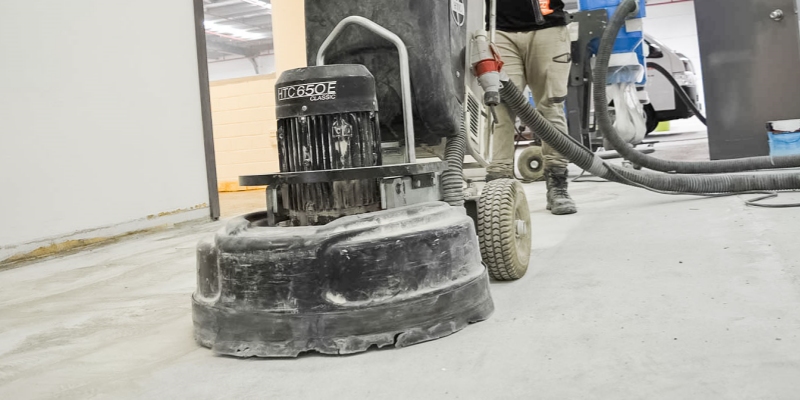
Una de las principales razones por las que aparecen las marcas de remolino es el control inconsistente de la máquina. Si la rectificadora se mueve demasiado rápido, la superposición entre las pasadas de rectificado no es uniforme o la presión no se aplica de manera constante, las herramientas de diamante pueden eliminar concreto a diferentes velocidades en distintas zonas del piso. Esto es especialmente notable con las rectificadoras planetarias, donde mantener un patrón de desplazamiento estable y equilibrado es clave para obtener resultados de rectificado uniformes. Cuando el proceso se controla correctamente, ayuda a evitar que algunas áreas se rectifiquen en exceso mientras que otras no reciben suficiente eliminación de material.
La selección de herramientas y las condiciones de la superficie son importantes
El estado del concreto y las herramientas de rectificado de diamante que elijas desempeñan un papel importante en el patrón final de rectificado. Si usas herramientas demasiado agresivas, demasiado desgastadas o simplemente no adecuadas para la dureza del concreto, puedes terminar con patrones de rayado desiguales, y estos suelen aparecer más tarde como marcas de remolino. En proyectos reales, los contratistas profesionales suelen seleccionar diferentes herramientas de diamante para pisos de concreto según la etapa de rectificado, el estado de la superficie y el perfil requerido. Herramientas de diamante TransGrind, por ejemplo, están diseñadas para ofrecer un rendimiento confiable en una variedad de sistemas de rectificado, incluidas máquinas reconocidas como las rectificadoras Husqvarna, Lavina y HTC, ayudando a los contratistas a mantener resultados de rectificado más consistentes en diferentes superficies de concreto.
Omitir pasos de rectificado puede hacer que las marcas sean más visibles
Las marcas de remolino no siempre aparecen durante la pasada final de rectificado. En muchos casos, se vuelven más visibles más adelante porque los patrones de rayado anteriores no se refinaron por completo antes de pasar a la siguiente etapa. Omitir pasos de grano, cambiar herramientas demasiado pronto o acelerar el proceso puede dejar marcas inconsistentes que permanecen visibles incluso después del pulido. Cuando sigues la progresión adecuada de rectificado, cada etapa elimina el patrón de rayado anterior de manera más uniforme y produce una superficie general más homogénea.
Cómo reducir las marcas de remolino durante el rectificado
Para reducir las marcas de remolino, necesitas un buen control de la máquina, las herramientas de diamante adecuadas y un flujo de trabajo constante. Los operadores deben mover la rectificadora de manera uniforme, mantener una superposición adecuada entre las pasadas y limpiar el piso a fondo entre las etapas de rectificado. Adaptar las herramientas a las condiciones del concreto y reemplazar los abrasivos desgastados cuando sea necesario también ayuda a mantener estable el rendimiento del rectificado y reduce las probabilidades de necesitar correcciones adicionales.
Reflexiones finales
Las marcas de remolino en el concreto suelen aparecer debido a varios factores que actúan en conjunto, incluidos la técnica de rectificado, la elección de herramientas y el nivel de control del proceso. Al prestar atención en cada etapa del rectificado y utilizar el enfoque adecuado para las condiciones específicas del piso, los contratistas pueden crear una superficie más uniforme y proporcionar una mejor base para el pulido u otros trabajos de acabado.

 IPv6 red compatible
 English
 français
 Deutsch
 русский
 italiano
 español
 português
 العربية
 日本語
日本語 Polski
 中文
中文